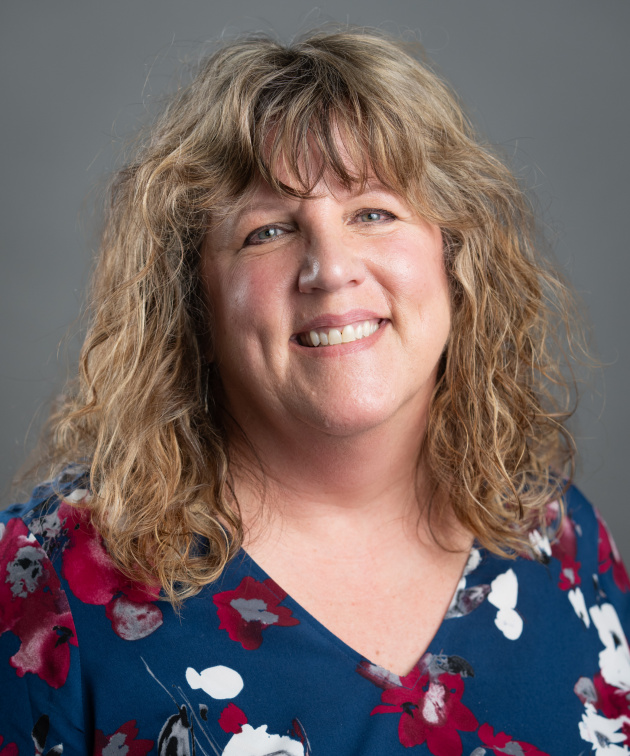
Get to Know Theresa
Theresa Teske came to GME the way a lot of great people come to things they're meant to do: by accident.
After spending two and a half decades managing horses and training riders, she realized she needed a more stable career (pun intended).
The invitation to interview in the Cardiovascular Medicine division at the University of Wisconsin came at a meaningful time. She had lost her mother to heart failure just months earlier. Even now, she is motivated by the idea of playing some small part in helping put more qualified cardiologists out into the world.
So she took a state skills test, bought Excel for Dummies, read the first three chapters, and got the job. She started at UW School of Medicine and Public Health in July 2014. By March of the following year, she was coordinating a cardiology fellowship and managing didactics for 3 others. Two years later, she was nominated by her Program Directors for an institutional GME award, but was too junior in her career to be considered. She was just getting started.
Theresa now serves as GME Program Manager for all five of Wisconsin's accredited cardiovascular fellowship programs: Cardiovascular Disease, Clinical Cardiac Electrophysiology, Interventional Cardiology, Advanced Heart Failure & Transplant Cardiology, and Adult Congenital Heart Disease. She holds her C-TAGME certification, has twice received the UWHealth GMEC Program Coordinator Excellence Award, was selected as a member of the ACGME Coordinators' Advisory Group, and was recently nominated by her peers to be Chair of ACC FACET, the national cardiology fellowship coordinators' organization.
While she would never say so herself, she's a bit of a celebrity. At an ACC national meeting a couple of years ago, she sat down at a table and two strangers immediately asked, "Are you Theresa?" and told her she was famous in the Google group. She's the person people turn to when they have a question, need a template, or just need someone to tell them it's going to be okay.
What makes Theresa so effective is something that took two and a half decades of working with horses to develop: the understanding that you cannot teach every individual the same way, and that trying to is, frankly, backwards. Some people respond to a light suggestion. Others need something a little firmer before they start to make changes. The skill is knowing the difference, staying flexible, and adjusting until something lands. She brings that same instinct to everything: fellows navigating difficult rotations, new coordinators finding their footing, faculty who need a nudge toward an uncomfortable conversation. Her philosophy is simple: meet people where they are, adapt to their needs, encourage curiosity, and never make anyone apologize for asking the same question twice. She will tell you plainly that in a role this cyclical and complex, the only way to build real knowledge is to keep asking until it sticks.
As a mentor, Theresa feels successful when the people she's trained go on to thrive in other departments and institutions. She's built a reputation for helping newer coordinators develop not just competency, but confidence: the confidence to ask their program director the uncomfortable question, to stand firm in a policy conversation with a physician, and to trust that their view from the administrative side of the house is just as valuable as the view from the clinical side. Her core belief is that the right attitude, genuine curiosity, and a willingness to keep learning will take you further in this field than any degree or prior experience ever could. She is living proof.
What People Say About Theresa:
Join GME Mentor to Learn from Theresa
Monthly Membership
$12/mo
Month-to-month subscription
- All mini-courses and study guides
- 24/7 access to discussion boards
- Expert help when you need it
Annual Membership
$120/yr
Get two months FREE
- All mini-courses and study guides
- 24/7 access to discussion boards
- Expert help when you need it